
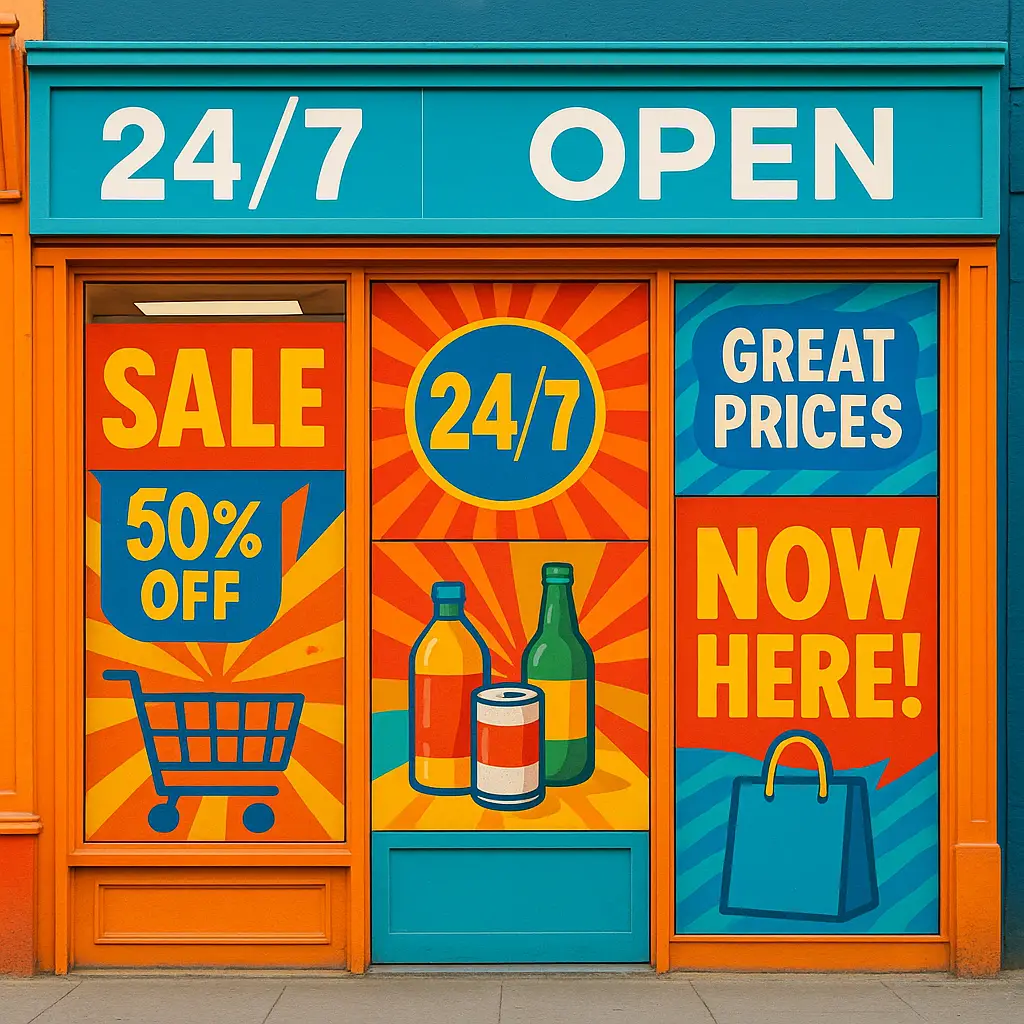
Window Graphics: Turn Your Storefront into a 24/7 Billboard
Transform your storefront into a 24/7 billboard! Discover how store window graphics, from decals to lettering, boost visibility, attract customers, and enhance your brand.
In the rapidly evolving digital landscape of 2025, visual communication is more critical for business success than ever before. This is where the integration of AI in graphic design moves from a futuristic novelty to an essential business strategy. The conversation is no longer about whether artificial intelligence will impact the creative industry, but how businesses can strategically leverage it to gain a competitive edge. This isn’t about replacing human creativity; it’s about augmenting it. By empowering designers to automate design tasks like background removal or generating hundreds of variations in seconds, AI frees up invaluable time for strategic thinking, innovation, and brand storytelling.
For any business aiming to stay relevant, understanding the benefits of AI is non-negotiable. It promises unprecedented efficiency, consistent branding across all channels, and the ability to explore creative avenues previously out of reach. Embracing these tools is key to building a more agile and innovative brand for the future.
Let’s be clear: the role of AI in graphic design is not to replace the creative spark of a human designer. Instead, think of it as the ultimate co-pilot. Artificial intelligence excels at processing vast amounts of visual data, recognizing patterns, and executing rule-based instructions with superhuman speed. This makes it incredibly powerful for streamlining the design workflow. For instance, an AI can generate hundreds of logo variations based on a single concept, suggest color palettes that align with a specific mood, or perfectly resize an entire campaign’s worth of assets for different platforms in moments.
This is where the true synergy between AI and creativity shines. While the AI handles the heavy lifting and repetitive work, the human designer is freed to focus on the strategic elements: the core concept, emotional resonance, and brand narrative. It’s a collaborative process where the designer provides the ‘why’ and the ‘what,’ and the AI provides the ‘how’—faster and more efficiently than ever before. This partnership doesn’t diminish the designer’s value; it amplifies it, allowing businesses to explore more creative directions without a proportional increase in time or resources.
At its core, AI-powered design is the practical application of machine learning algorithms within the creative process. It goes far beyond simple filters or templates. Instead, these sophisticated AI graphic design tools are trained on vast datasets of images, layouts, and artistic principles, allowing them to understand and apply concepts like color harmony, composition, and visual hierarchy. This enables two primary functions: generation and assistance. A generative tool, like an AI design generator, can create entirely new visuals from a text prompt, bringing a concept to life in seconds. An assistive tool, on the other hand, works to enhance and automate design tasks within an existing project—think intelligent background removal, predictive font pairing suggestions, or smart resizing that maintains the integrity of the original design. For businesses, this means leveraging tools that don’t just follow commands, but actively contribute to a faster, more intelligent design workflow, making it a cornerstone of modern visual strategy.
The journey of AI in graphic design has seen a dramatic shift in capability and purpose. Initially, AI tools served as digital assistants, excelling at discrete, time-consuming jobs. Think of early content-aware fills or magic wand selection tools—powerful, but purely task-oriented. Today, however, we are witnessing their evolution into true creative collaborators. Modern AI graphic design tools don’t just wait for a command; they actively participate in the ideation process. An advanced AI can analyze a creative brief and suggest multiple brand concepts, generate mood boards, or propose layout variations a designer may not have considered. This evolution fundamentally changes the design workflow. Instead of merely offloading repetitive work, designers now engage in a dynamic dialogue with their tools, brainstorming and refining ideas together. This collaborative partnership is a glimpse into the future of graphic design, where the synergy between human intuition and machine intelligence unlocks a new level of creative potential for any business.
The integration of AI in graphic design fundamentally overhauls the traditional, linear creative process. Where a typical design workflow once involved a slow, step-by-step progression from brief to final asset, AI introduces unprecedented speed and parallel processing. Imagine being able to automate design tasks that once consumed entire days; actions like generating hundreds of ad variations for A/B testing or resizing a campaign for every social media platform can now be completed in minutes. This acceleration is one of the core benefits of AI for any business. It doesn’t just make things faster—it transforms the nature of creative exploration. Designers can now use an AI design generator to instantly visualize dozens of initial concepts, allowing them to iterate and refine ideas at a pace previously unimaginable. This shifts their focus from tedious manual execution to high-level strategy and ideation, directly enhancing the value they bring to the business and unlocking new frontiers where AI and creativity merge.
One of the most immediate and tangible benefits of AI is its power to automate design tasks that are essential but creatively draining. Think of the hours designers traditionally spent on painstaking work like manually masking a subject to remove a background, or meticulously resizing a single key visual for a dozen different social media formats. Modern AI graphic design tools now handle these jobs in seconds. With a single click, AI can flawlessly isolate a product from its background, intelligently crop an image to fit various aspect ratios without losing the focal point, or even batch-process thousands of images with consistent edits. This isn’t just a time-saver; it’s a fundamental shift in the design workflow. By offloading this high-volume, low-creativity work to AI, businesses empower their designers to dedicate their expertise to what truly matters: ideation, brand strategy, and creating impactful visual narratives. The result is a more efficient, agile, and creatively fulfilled design team.
Beyond automating chores, the most transformative role of AI in graphic design is as a powerful brainstorming partner. The initial ideation phase, traditionally one of the most time-consuming parts of the design workflow, is now supercharged. Using an AI design generator, a designer can input a simple brief, a few keywords, or a mood, and receive a vast array of visual concepts in moments. This isn’t about finding a final, polished design; it’s about creating a rich visual sandbox for exploration. This instant feedback loop allows designers to quickly validate or discard ideas, test unconventional color palettes, and explore diverse layout structures at a scale previously impossible. This powerful synergy between AI and creativity doesn’t replace human ingenuity—it amplifies it, providing endless starting points and pushing creative boundaries. For a business, this means getting to stronger, more innovative concepts faster than ever before.
In a world where personalization is paramount, the ability to create tailored visual content for diverse audience segments is a massive competitive advantage. Historically, this has been a resource-intensive nightmare. However, the practical application of AI in graphic design completely changes the equation. Modern AI graphic design tools can take a single core creative and instantly generate hundreds or even thousands of variations, altering colors, text, or imagery to resonate with specific demographics, locations, or user behaviors. This is one of the most profound benefits of AI for business. Imagine an ad campaign where visuals are automatically customized for different A/B tests or personalized for individual user profiles. This capability to produce variations at scale transforms the design workflow from a bottleneck into an engine for hyper-targeted marketing, ensuring that your brand’s message feels relevant and personal to every single customer.
Adopting AI in graphic design is a strategic move that delivers tangible, bottom-line advantages. The most significant benefit is a dramatic increase in operational efficiency. By streamlining the design workflow and automating time-intensive tasks, your business can significantly reduce project turnaround times and lower production costs, allowing you to launch campaigns faster and allocate resources more effectively. This efficiency also drives unparalleled brand consistency. AI tools can apply brand guidelines flawlessly across thousands of assets, ensuring every customer touchpoint is cohesive and professional. Finally, the synergy between AI and creativity opens the door to greater innovation. By exploring more concepts in less time, your team can arrive at more impactful and data-driven creative solutions. Ultimately, the core benefits of AI translate into a more agile, consistent, and innovative brand that can outpace the competition in a crowded marketplace. This is the essential value of AI for business today.
For any modern business, speed to market is a critical competitive advantage, and this is where the impact of AI in graphic design is felt most acutely. By empowering designers to automate design tasks—from creating hundreds of ad variations to flawlessly resizing assets for every digital channel—AI drastically shortens the production cycle. Processes that once consumed days of meticulous manual labor can now be completed in a matter of hours, or even minutes. This fundamental acceleration of the design workflow means your marketing campaigns can be launched faster, product updates can be supported with visuals almost instantly, and your brand can react to market trends with unprecedented agility. Ultimately, this increased efficiency translates directly into lower production costs and a higher return on investment, making it one of the most compelling benefits of AI for business and a key driver for its adoption.
Beyond speed, the efficiency driven by AI in graphic design translates directly into significant, measurable cost savings. When you automate design tasks that previously required hours of manual labor—from routine image edits to generating campaign variations—you fundamentally reduce the person-hours needed for each project. For businesses working with agencies or freelancers, this means fewer billable hours. For those with in-house teams, it means higher output without increasing headcount. Furthermore, the reliance on expensive stock photography subscriptions is diminished when an AI design generator can create bespoke, royalty-free visuals on demand. This optimization of the design workflow allows businesses to produce more high-quality content for less, freeing up budget that can be reallocated to other strategic growth initiatives. This financial benefit makes adopting AI for business not just an innovation, but a sound fiscal decision.
One of the most persistent challenges for any growing business is maintaining strict brand consistency across countless marketing channels. This is where the strategic use of AI in graphic design provides a powerful and scalable solution. AI-driven templates and design systems are more than just static layouts; they are intelligent frameworks pre-loaded with your brand’s specific guidelines—from exact color palettes and approved typography to logo usage and spacing rules. When a new asset is needed, AI ensures every element automatically adheres to these predefined standards, effectively eliminating the risk of human error or off-brand “rogue” designs. This not only streamlines the design workflow but also empowers non-designers to create on-brand materials safely. The result is a perfectly cohesive and professional brand identity at scale, reinforcing customer trust and recognition with every visual produced. This is one of the most practical benefits of AI for business, safeguarding your brand’s hard-earned integrity.
Navigating the expanding landscape of AI graphic design tools can feel overwhelming, but understanding the key players is crucial for any modern business. These tools generally fall into a few key categories, each tailored to different needs within the creative process. First, you have comprehensive design suites like Adobe Firefly and Canva‘s Magic Studio, which seamlessly integrate AI features to enhance an existing design workflow. Then there are specialized platforms like Midjourney and DALL-E, powerful AI design generator tools focused purely on creating stunning, original visuals from text prompts. Finally, a host of utility tools exist to automate design tasks like upscaling images or removing backgrounds. Choosing the right platform depends entirely on your team’s specific goals—whether you need to streamline production, spark new ideas, or empower non-designers. This section will break down the essential tools to help you leverage the full potential of AI for business and stay ahead of the curve.
At the forefront of the creative revolution are AI image and asset generators like Midjourney and DALL-E 3. These powerful AI graphic design tools specialize in transforming text descriptions, known as prompts, into unique, high-quality visuals from scratch. For businesses, this capability is a game-changer. Instead of spending hours sifting through generic stock photos or commissioning expensive custom illustrations, a team can simply describe a scene, style, or abstract concept and receive multiple visual interpretations in seconds. This makes them an invaluable asset in the design workflow, especially for the ideation phase. Teams can rapidly generate mood boards, create concept art for campaigns, or design bespoke patterns and textures. While the output from an AI design generator often requires a human designer’s touch for final polish and brand alignment, their role in pioneering new creative directions is undeniable. They are a core component of using AI in graphic design to achieve truly original results.
While dedicated generators excel at creating raw visual assets, smart design platforms like Canva and Visme integrate AI directly into a complete end-to-end design workflow. These accessible AI graphic design tools are designed for rapid production, empowering both designers and non-designers alike. Platforms such as Canva’s Magic Studio can instantly generate entire presentations from a text prompt, suggest layout variations for a social media post, or automatically apply your brand’s colors and fonts to any template. This practical application of AI in graphic design is invaluable for day-to-day business needs. It allows marketing teams and other departments to create on-brand collateral quickly and independently, without needing to start from scratch. These platforms are less about pure ideation and more about execution, acting as a powerful engine to automate design tasks and ensure a high volume of consistent, professional-looking content. They represent a critical and highly practical use of AI for business, democratizing design and boosting productivity across the entire organization.
For professional designers and creative agencies, the most powerful application of AI in graphic design often comes directly within the software they already master. Rather than switching to a new platform, they leverage AI-powered features built into industry-standard applications like the Adobe Creative Cloud. This is driven by technologies like Adobe Sensei, the AI and machine learning framework that supercharges tools like Photoshop and Illustrator. Features like Generative Fill, which can add or remove objects from an image seamlessly, or the new Text to Vector Graphic capability, which creates editable vector art from a simple prompt, are prime examples. These integrated AI graphic design tools don’t disrupt the established design workflow; they enhance it. By bringing AI capabilities directly into a familiar environment, they allow designers to automate design tasks and experiment with new ideas without ever leaving their primary canvas. This deep integration represents the most seamless fusion of AI and creativity, boosting efficiency for any business heavily invested in professional creative output.
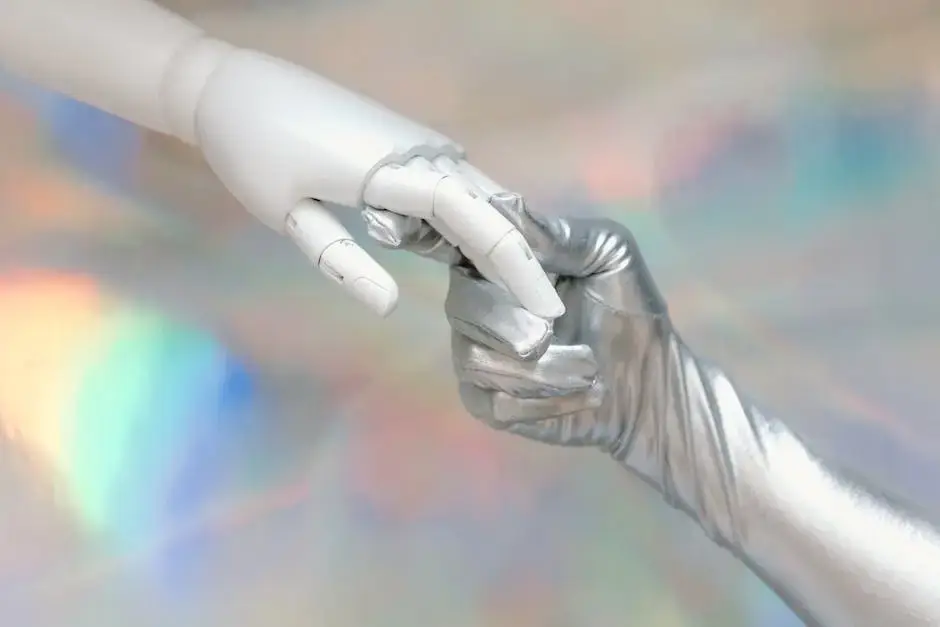
This is the inevitable question that follows any discussion about the powerful capabilities of AI in graphic design. While the fear of job displacement is understandable, the consensus points not to replacement, but to a profound evolution of the designer’s role. AI tools excel at execution and generation based on prompts, but they lack the uniquely human skills that are the bedrock of great design: strategic thinking, empathy, cultural nuance, and the ability to interpret a client’s unspoken needs. An AI design generator can create a beautiful image, but it cannot build a relationship with a stakeholder or craft a compelling brand story that resonates emotionally with an audience.
The future of graphic design is collaborative. Designers are shifting from being sole creators to becoming creative directors and AI conductors. Their value will be in their ability to ask the right questions, guide the AI, curate the best options, and apply the strategic and emotional intelligence that machines cannot replicate. The most successful designers will be those who master these tools, using them to augment their own innate AI and creativity and deliver higher-value strategic work for their clients.
While AI can flawlessly execute a command, it cannot formulate the strategy behind it. This is where the human designer remains irreplaceable. Great design is not merely about aesthetics; it’s about solving a specific business problem for a specific audience. This requires deep strategic thinking—understanding the competitive landscape, grasping the nuances of a creative brief, and empathizing with a target user’s motivations and pain points. Furthermore, design is fundamentally an emotional discipline. A human designer leverages lived experience and cultural understanding to create visuals that evoke trust, excitement, or a sense of belonging, forging a connection that an algorithm cannot replicate. In the collaborative future of graphic design, the designer’s most critical role is as an expert curator. They must apply critical thinking to sift through AI-generated options, identifying the strategically sound and emotionally resonant solution that will truly achieve the business’s goals.
The powerful capabilities of AI in graphic design introduce significant ethical and legal questions, particularly around copyright and originality. Many prominent AI design generator models are trained on vast datasets of publicly available images, often without the explicit permission of the original creators. This raises a critical question for any business: is the generated output a unique asset, or an unintentional derivative work that could infringe on existing copyrights? The legal landscape is still evolving, and using AI-generated visuals without clear guidance presents a tangible risk of future legal challenges.
To mitigate this, businesses must be diligent. It is crucial to vet your chosen AI graphic design tools, prioritizing platforms that are transparent about their training data and offer clear commercial use licenses or legal indemnification. This is another area where the human designer’s role is vital. A designer can use AI-generated concepts as a starting point, but then apply their own skill to significantly modify, combine, and refine the work, ensuring the final asset is not only on-brand but also a unique piece of intellectual property that is safe for commercial use.
To successfully navigate the challenges and opportunities of AI in graphic design, businesses must invest in their most valuable creative asset: their people. The future of graphic design isn’t about replacing designers but about evolving their skill sets. Proactive upskilling is essential. This means moving beyond traditional software proficiency and training your team in new, critical competencies. Key skills now include prompt engineering—the art of crafting precise instructions for an AI design generator—and critical curation, the ability to evaluate and strategically refine AI-generated outputs. It also involves teaching designers how to ethically and effectively integrate these powerful AI graphic design tools into their existing design workflow. By fostering a culture of continuous learning and experimentation, you empower your team to transition from pure creators to strategic creative directors who can leverage AI to produce exceptional, business-driving results. This investment ensures your creative capabilities remain a core competitive advantage.
The journey into the world of AI in graphic design is not a radical leap but a strategic integration. The most effective approach begins by identifying the biggest bottlenecks in your current design workflow. Start by implementing tools that automate design tasks like resizing and background removal, immediately freeing your team to focus on high-value strategic work. From there, encourage experimentation with an AI design generator not for final assets, but as a powerful brainstorming partner to accelerate ideation and explore new creative territories. The key to success lies not in replacing human talent, but augmenting it. Invest in training your team to become expert conductors of these technologies, guiding AI to produce work that is faster, more innovative, and tightly aligned with your business goals. By embracing this collaborative model, you position your brand at the forefront of the future of graphic design, ready to create more effectively and competitively in 2025 and beyond.
Transform your storefront into a 24/7 billboard! Discover how store window graphics, from decals to lettering, boost visibility, attract customers, and enhance your brand.
Choosing the best CMS for your business? Compare WordPress, Shopify, and Squarespace side-by-side to find the ideal platform for your online store or website.
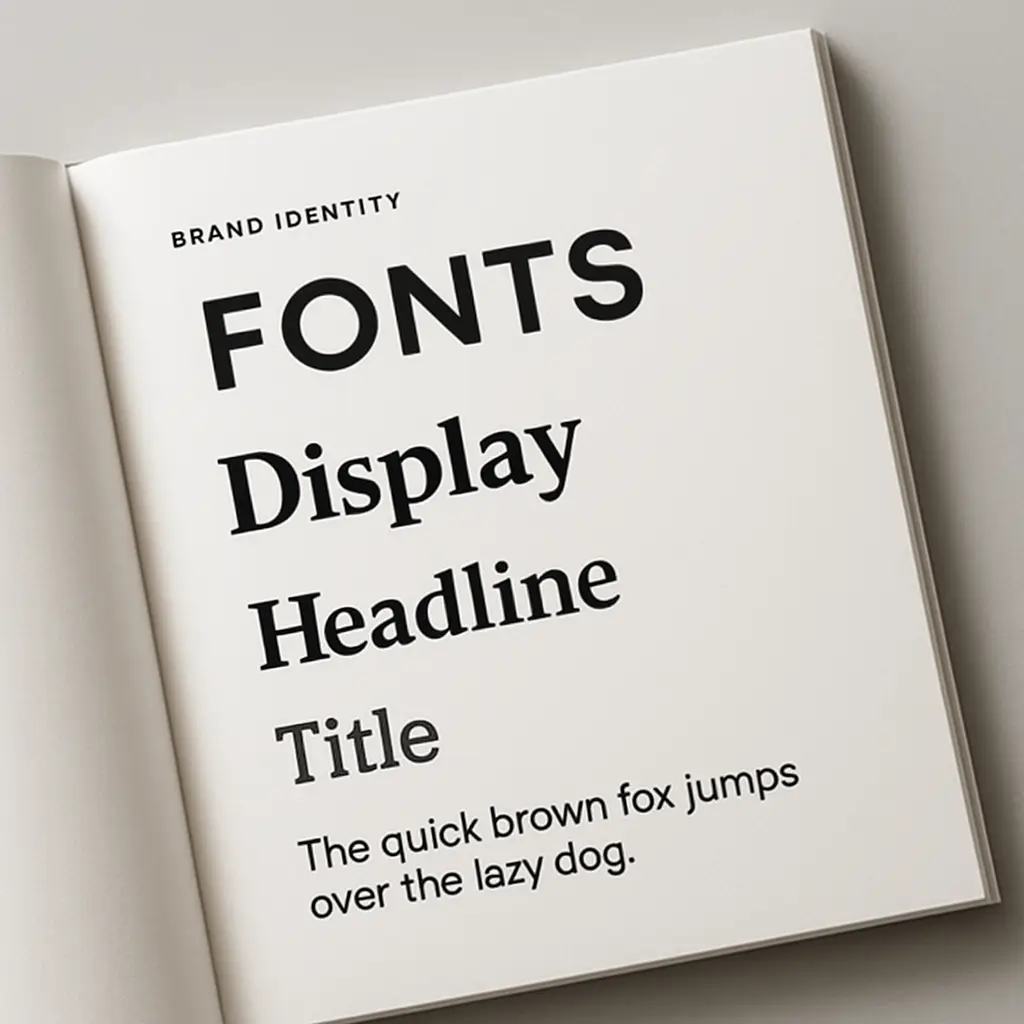
Master choosing the right fonts for your brand. Learn font psychology, pairing, and legibility to craft a powerful brand identity that connects with your audience.