

Design Effective Vehicle Wraps That Turn Heads
Learn to design effective vehicle wraps that turn heads and boost your brand. Get expert design tips for mobile advertising success, ensuring clarity and impact on the road.
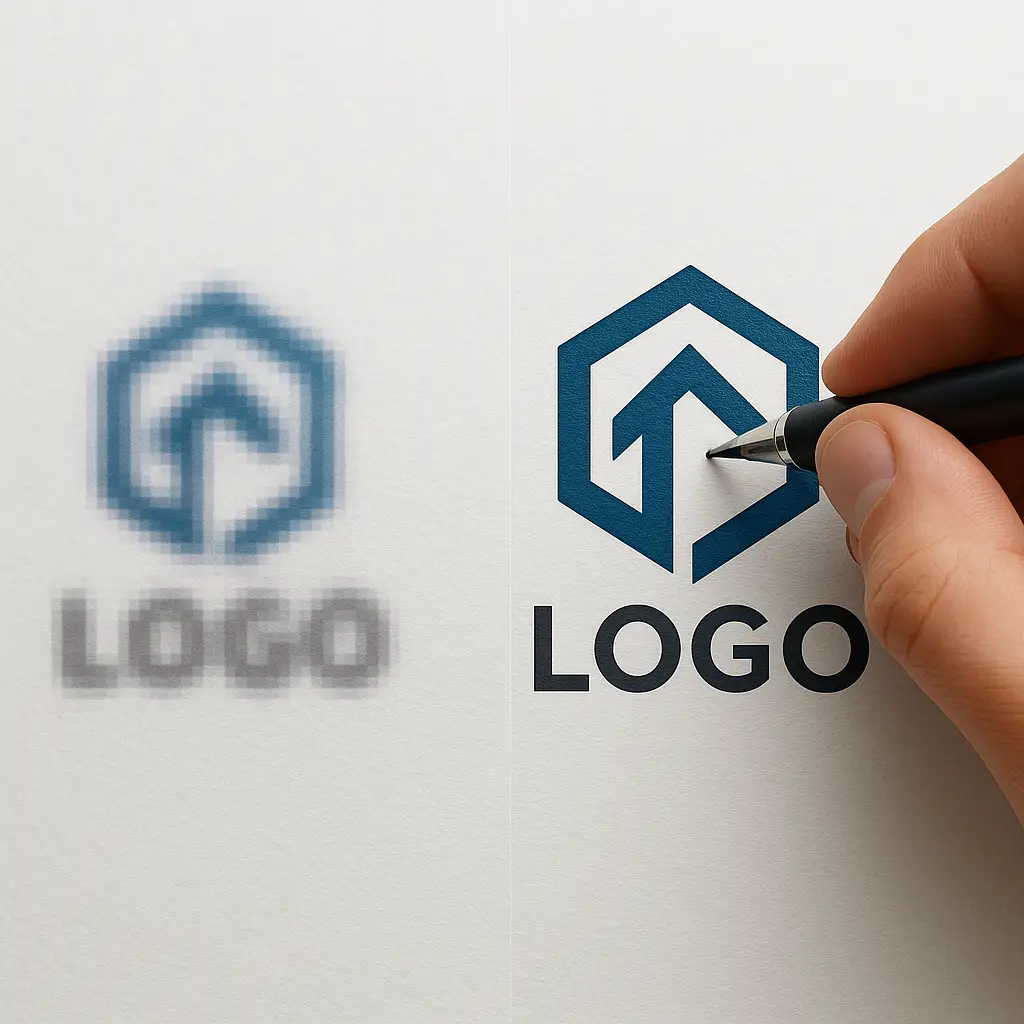
Your business logo is far more than just a graphic; it’s the face of your brand and the cornerstone of your visual identity. It’s often the very first thing a potential customer sees, making it a critical part of their first impression. A strong, professional logo can instantly build trust, communicate your company’s values, and create a memorable connection. However, a poorly executed one can do the exact opposite, projecting an unprofessional image and confusing your audience before you’ve even had a chance to win them over. This is why avoiding common logo design mistakes is not just a creative exercise—it’s a crucial business decision. By understanding these pitfalls, from poor logo font choice to a flawed logo color palette, you can ensure your brand’s most important visual asset is a powerful tool for growth, not a liability holding you back.
One of the most common logo design mistakes is trying to say too much. In an effort to showcase everything a business does, owners often request a design that is overly complex, cluttered with intricate details and elaborate effects. While the intention might be noble, the result is often a bad logo design that is hard to remember and difficult to recognize at a glance. The golden rule for a professional logo is simplicity. A crucial test for any business logo design is its logo scalability; a detailed illustration may look impressive on a large screen, but it will likely become an illegible smudge when scaled down for a business card, social media icon, or app favicon. To build a strong and versatile brand identity, you must resist the urge to over-design. A simple, bold mark is far more impactful and is the first step toward creating a truly timeless logo.
The world’s most iconic brands—think of the swoosh or the bitten apple—share a common trait: simplicity. This is by design. The human brain can process and recall simple, clean shapes far more easily than a cluttered illustration. In a fast-paced market, this instant recognition is invaluable. A customer might only glimpse your logo for a second, and a simple design ensures it sticks. An overly detailed logo, a classic trait of bad logo design, is easily forgotten, failing the most basic test of a memorable visual identity.
A crucial test for any modern business logo design is its performance across countless applications. Think about all the places your logo must live: from a massive billboard to a tiny favicon in a browser tab. An intricate design with fine lines and subtle gradients, while perhaps beautiful on a large monitor, will inevitably fail this test. This lack of logo scalability is a hallmark of bad logo design. When shrunk, those delicate details merge into an unrecognizable blur, rendering your logo ineffective and unprofessional where it matters most.
The typography you choose is the voice of your logo, and a poor logo font choice can speak volumes about your brand in all the wrong ways. This is one of the most frequent and damaging logo design mistakes a business can make. A common pitfall is using too many fonts, which creates a disjointed and chaotic look, or selecting a font that is simply illegible, especially when scaled down. Even worse is resorting to generic, overused, or cliché fonts that instantly signal an amateurish approach to your business logo design. The font must align with your brand’s personality—a sophisticated serif for a luxury brand, or a clean sans-serif for a tech startup. Ignoring the power of typography is a classic example of bad logo design, turning what could be a professional logo into something forgettable and ineffective. A thoughtful font selection is essential for a balanced, readable, and timeless logo.
A font’s primary job is to be read. If your chosen typeface is too ornate or condensed, it becomes illegible when scaled down, instantly failing a key test of a professional logo. Equally damaging is the use of generic, overused fonts. This poor logo font choice is a classic sign of bad logo design, signaling a lack of effort and creativity that undermines your brand’s credibility. Your logo will struggle to stand out and will instead look amateurish rather than authoritative and unique.
When it comes to your logo font choice, a simple rule is to stick to two fonts at the absolute maximum. Using more than two is one of the most common logo design mistakes, creating visual clutter that makes your brand look disorganized and amateurish. If you do use a pair of fonts, ensure they have a clear purpose and contrast—like a distinctive font for your company name and a clean, simple one for a tagline. This approach creates hierarchy and balance, contributing to a professional logo.
Chasing the latest design craze is a tempting but ultimately destructive path for your brand. While incorporating a trendy element might make your logo feel modern and relevant right now, it almost guarantees it will look dated in just a few years. This is one of the most shortsighted logo design mistakes a business can make. Your logo is a long-term investment, not a fast-fashion accessory. The goal should always be to create a timeless logo that remains effective and relevant for decades, not just a single season. A design that relies heavily on fads—be it a specific gradient style, a ’90s-inspired font, or a particular abstract shape—will quickly become an example of bad logo design, forcing you into a costly redesign to stay current. A truly professional logo is built on enduring principles, ensuring your business logo design serves as a stable anchor for your brand identity.
When your logo becomes a visual time capsule for a short-lived trend, your entire brand risks looking dated and out of touch. This is a classic example of bad logo design. It can lead potential customers to subconsciously question the relevance and quality of your offerings, eroding trust. Ultimately, you’re forced into a costly and disruptive rebrand just to stay current, which can confuse your loyal audience. A truly professional logo avoids this pitfall by aiming for a timeless logo from day one.
To create a timeless logo, you must look beyond current fads and focus on enduring design principles. A truly professional logo is built on a strong, unique concept that reflects your brand’s core values, not a fleeting visual effect. Prioritize simplicity, clear typography, and a balanced composition. By focusing on a memorable mark that is uniquely yours, you can avoid the classic logo design mistakes tied to trends and ensure your business logo design remains effective and relevant for years to come.
A critical technical error that plagues many companies is one of the most fundamental logo design mistakes: using raster images instead of vectors. Your final business logo design should never be just a JPEG or PNG file. These raster formats are built from a fixed grid of pixels, meaning that when you try to enlarge them for a trade show banner or vehicle wrap, they become blurry and pixelated—a hallmark of bad logo design. This complete lack of logo scalability severely limits your brand. In contrast, a professional logo is always created in a vector format (like AI, EPS, or SVG). Because vectors use mathematical paths, they can be scaled infinitely without losing quality, ensuring a sharp, clean image on everything from a pen to a billboard. Insisting on vector files is non-negotiable for a versatile and long-lasting brand identity.
The core of this common logo design mistake lies in how the image files are built. A raster file, like a JPEG or PNG, is essentially a map of tiny squares called pixels. When you enlarge it, you are simply stretching those fixed pixels, which results in the blurry, blocky mess characteristic of bad logo design. In stark contrast, a vector file (like an SVG or AI) uses mathematical equations to create paths and shapes. This ensures perfect logo scalability, as the image is redrawn flawlessly at any size, keeping it sharp on everything from a pen to a billboard.
In today’s multi-channel world, your logo must work everywhere. A lack of logo scalability is a critical failure that directly impacts your marketing and brand perception. Imagine your crisp design becoming a blurry mess on a trade show banner or a company vehicle—it instantly undermines your credibility. This is one of the most damaging logo design mistakes because it limits your brand’s potential. A truly professional logo is a versatile asset that maintains its integrity and sharpness across all applications, from digital to print.

Color is a powerful psychological tool, and selecting the wrong logo color palette is one of the most impactful logo design mistakes a business can make. It’s not just about picking colors you like; it’s about choosing hues that evoke the right emotions and align with your brand’s message. A jarring or inappropriate color scheme can instantly create a disconnect with your audience, sending the wrong signal before they even know what you do. Another common pitfall is using too many colors, which results in a cluttered and unprofessional look—a clear sign of bad logo design. A strong business logo design uses a limited, purposeful palette that reinforces its identity and is versatile enough to work in a single color. An effective logo color palette is crucial for building brand recognition and creating a cohesive, professional logo that connects with customers on a subconscious level.
Colors communicate on a subconscious level. Blue often conveys trust and security, which is why it’s popular in finance and tech. Green is associated with health and nature, while red can evoke excitement and urgency. Choosing a color that clashes with your industry or brand message is a classic logo design mistake. A well-chosen logo color palette isn’t just aesthetic; it’s a strategic decision that helps define your brand’s personality, ensuring your professional logo connects instantly with your target audience.
Beyond the psychological missteps, several technical color errors are classic logo design mistakes. Using too many colors is a common pitfall, creating a chaotic logo color palette that looks amateurish and is difficult to reproduce consistently. Another hallmark of bad logo design is poor contrast, which can make your logo illegible, especially against different backgrounds or in a single-color version. A truly professional logo must be versatile, and a poorly considered palette severely undermines that critical goal.
Your logo’s primary job is to differentiate your business, so one of the most self-defeating logo design mistakes is to imitate your competitors or fall back on industry clichés. When your design is too similar to another brand’s, you create customer confusion and dilute your own identity, not to mention risking serious legal repercussions. This approach instantly signals a lack of originality and confidence. Equally damaging is the use of generic, overused visual tropes—a swoosh for movement, a globe for ‘international,’ or a lightbulb for an idea. While seemingly safe, these clichés are the definition of bad logo design because they are unmemorable and fail to communicate what makes your business unique. A truly professional logo is built on an original concept that sets you apart. For a successful business logo design, you must avoid the temptation to blend in and instead focus on creating a distinctive mark that is uniquely yours.
In a crowded market, differentiation is everything. When your business logo design mimics a competitor, you’re essentially doing their marketing for them—a disastrous logo design mistake. Originality is what allows your brand to be remembered and chosen over others. A truly professional logo is built on a unique concept that tells your specific story, making your brand instantly recognizable. This is not just about avoiding bad logo design; it’s a strategic move to build a memorable and defensible brand identity.
Every industry has its visual shortcuts: the tooth for a dentist, a house roof for real estate, or a lightbulb for an “idea.” While seemingly safe, relying on these icons is one of the most common logo design mistakes. Using these overused clichés ensures your business logo design will be instantly forgettable and lost in a sea of similar marks. This is the very definition of bad logo design. A truly professional logo avoids these lazy shortcuts, digging deeper to find a unique visual concept.

Beyond just scaling up and down, an effective business logo design must be versatile enough to work in any situation. One of the most common logo design mistakes is approving a design that only looks good in its full-color, ideal state. What happens when it needs to be reproduced in a single color for a promotional product or embroidered on a uniform? What if it must be placed on a dark or busy photographic background? A logo that depends entirely on its specific logo color palette or complex gradients to be recognizable will fail these real-world tests. This lack of flexibility is a clear sign of bad logo design, severely limiting your marketing opportunities. A professional logo is designed from the outset to be robust and adaptable, maintaining its integrity in black and white, in reverse, and across any medium, ensuring your brand is always presented flawlessly.
A crucial litmus test for any design is its performance in a single color. Before you even commit to a final logo color palette, you must see if the logo works in just black and white. If the design becomes unrecognizable or its core message is lost without color, you have a fundamental flaw—a classic logo design mistake. This proves the logo is relying on color to mask a weak concept. A truly professional logo is powerful because of its shape and form, ensuring it remains effective on any single-color medium.
Beyond the single-color test, a truly versatile business logo design must be put through its paces across all potential applications. This is where many designs falter, leading to costly logo design mistakes. Mock up your logo on various backgrounds—dark, light, and even busy photographs. How does it look as a tiny app icon or embroidered on a polo shirt? A professional logo is robust enough to maintain its clarity and impact in every context, ensuring your brand looks its best no matter where it appears.
While it can seem logical to show exactly what your business does, being overly literal is a surprisingly common logo design mistake that stifles creativity and limits your brand’s potential. This approach results in a logo that is merely descriptive rather than evocative. For example, a bakery using a generic rolling pin or a tech company using a computer icon creates a bad logo design that is predictable and instantly forgettable. A truly professional logo goes beyond the obvious, aiming to capture the feeling or value behind your services, not just the product itself. This is a crucial distinction for a strong business logo design. A literal logo can also box your business in, making it difficult to expand your offerings in the future without a complete rebrand. Instead of illustrating your product, focus on a unique, conceptual mark that communicates your core mission, paving the way for a more flexible and timeless logo that can grow with your company.
The most iconic brands often use abstract or suggestive marks instead of literal illustrations. Consider Nike’s swoosh or Target’s bullseye; they don’t depict a product but instead evoke a core concept—speed or precision. This is the power of a professional logo. By moving beyond the literal, you create a unique and intriguing symbol that customers associate exclusively with your brand. Avoiding this common logo design mistake allows you to build deeper meaning into your mark over time, creating a flexible asset that won’t limit future growth.
One of the most persistent fears in business logo design is that a conceptual mark will confuse customers. However, underestimating your audience is a critical logo design mistake. A truly professional logo respects its viewers, inviting them to make a connection rather than simply stating the obvious. This moment of discovery creates a far more memorable and powerful impression than a literal icon, which is often a hallmark of bad logo design. Trust your audience—they are smarter than you think.
Ultimately, many of the pitfalls we’ve discussed lead to this final, fatal flaw: creating a logo that is simply unmemorable. This is one of the most critical logo design mistakes because if your audience can’t recall your visual identity, your brand has failed to make a lasting impression. A forgettable logo—one that is too generic, too complex, or too similar to others—is the very definition of bad logo design. It becomes visual white noise, failing its primary mission to create a mental shortcut to your business. A truly professional logo must be distinctive enough to cut through the clutter and simple enough to be easily recalled. The goal of your business logo design isn’t just to look good; it’s to be remembered. Anything less is a missed opportunity to build the brand recognition necessary for long-term success and a truly timeless logo.
The human brain is wired to remember simple, distinct shapes, which is why simplicity and uniqueness are the cornerstones of a memorable logo. A simple form can be processed and stored in memory in an instant, while uniqueness ensures it has no competition in that mental filing cabinet. A generic or complex logo—a classic sign of bad logo design—gets lost in the noise or is too difficult to recall accurately. A truly professional logo combines these two traits, creating an unforgettable mark that cements brand recall.
A simple yet powerful method is the memory test. Show your logo design to someone for 5-10 seconds, then take it away. Later, ask them to sketch what they recall. If they can reproduce the basic shape and concept, you likely have a memorable design. This test quickly exposes whether you’ve created a truly professional logo or a generic mark that is easily forgotten. A design that fails this simple recall test is a classic sign of bad logo design.

Perhaps the most encompassing of all logo design mistakes is underestimating the value of professional expertise. In an age of cheap logo generators and $5 design contests, the temptation to cut corners on your brand’s cornerstone is strong, but this is a classic path to bad logo design. A true professional brings more than just artistic skill; they bring strategic thinking, a deep understanding of market positioning, and the technical knowledge to avoid critical errors like using raster images or creating a design that isn’t versatile. A professional logo is a long-term investment in your brand’s credibility and recognition. Trying to save a few hundred dollars now by opting for an amateur business logo design will almost certainly lead to a generic, ineffective result that requires a costly and confusing rebrand later. Ultimately, failing to invest in professional guidance is the mistake that makes all the others possible.
The low price of a DIY or amateur logo is deceptive, hiding significant future expenses. Beyond the eventual cost of a complete rebrand, you face immediate financial drains. A technically flawed logo—a classic sign of bad logo design—forces you to reprint everything from business cards to signage. More importantly, an unprofessional mark erodes credibility, costing you potential customers and revenue from day one. This single choice is one of the costliest logo design mistakes, turning a short-term saving into a long-term liability.
The ideal time to invest in a professional is from day one, before you’ve printed a single business card. A professional designer doesn’t just create a pretty picture; they act as a strategic partner. They dive deep into your brand’s core values, target audience, and market position to craft a truly effective business logo design. This investment is crucial for avoiding the many logo design mistakes we’ve covered and ensuring you receive a versatile, professional logo that truly works for your business.
Navigating the world of branding can be complex, but successfully avoiding the top logo design mistakes is the most critical first step toward building a recognizable identity. As we’ve seen, a truly effective logo is far more than just an attractive graphic; it is a strategic asset built on foundational principles. A professional logo must be simple for easy recall, timeless to avoid becoming dated, and versatile enough to look sharp everywhere. This means paying close attention to every detail, from a thoughtful logo font choice and a strategic logo color palette to the technical necessity of logo scalability with vector files. By steering clear of the common pitfalls that lead to bad logo design, you invest in a powerful symbol that differentiates your brand, builds trust, and serves as a cornerstone for growth for years to come.
Learn to design effective vehicle wraps that turn heads and boost your brand. Get expert design tips for mobile advertising success, ensuring clarity and impact on the road.

Navigate Toronto sign permits and bylaws for your small business. This guide simplifies the application process, types of signs, and avoids costly penalties.

Explore the future of retail with in-store interactive signage trends. Boost customer engagement, bridge digital/physical gaps, and unlock data with AI, AR, and phygital tech.