
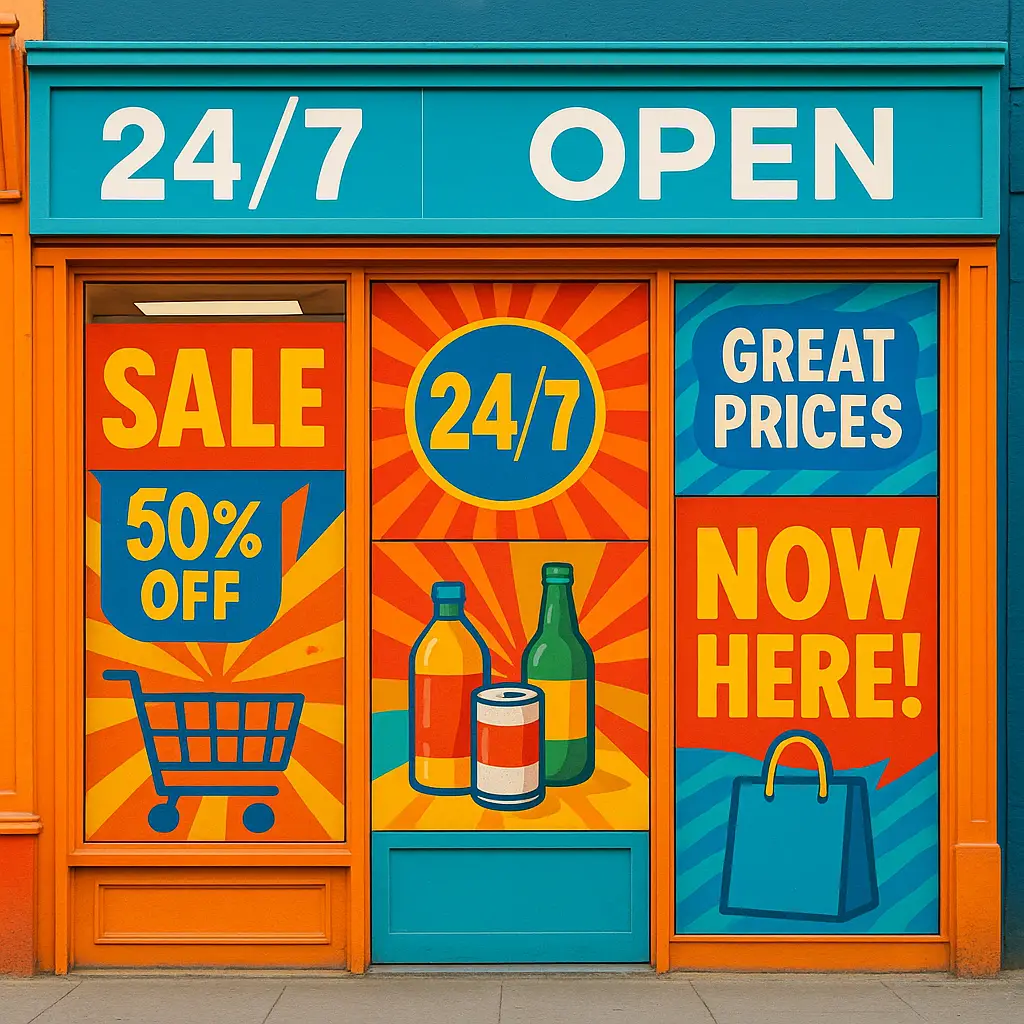
Window Graphics: Turn Your Storefront into a 24/7 Billboard
Transform your storefront into a 24/7 billboard! Discover how store window graphics, from decals to lettering, boost visibility, attract customers, and enhance your brand.

In a crowded digital world, how can your small business cut through the noise and speak directly to your customers? The answer is simpler and more powerful than you might think: email marketing. Unlike social media, where algorithms control who sees your content, your email list is an asset you own. It’s your direct, unfiltered line to the people who matter most—your audience. This is why mastering email marketing for small business is not just another task; it’s a foundational strategy for building lasting customer relationships, nurturing leads, and driving repeatable sales. Feeling overwhelmed about how to start email marketing? Don’t be. This comprehensive beginner’s guide to email marketing will walk you through every essential step, from choosing the right tools and building your list to launching your first successful campaign. Let’s get your business growing.

Before you send a single email, a solid foundation is crucial for long-term success. The first part of your email marketing strategy is defining your primary goal. What do you want to achieve? Are you looking to drive direct sales, build a loyal community, nurture new leads, or simply announce new products? Your objective will shape every decision you make, from the content you create to the audience you target. With your goals clear, the next foundational piece is choosing your tools. While it’s tempting to use your personal inbox, dedicated email marketing services are non-negotiable for any serious business. Platforms like Mailchimp, ConvertKit, or Constant Contact provide professional templates, automation features, vital analytics, and ensure you comply with anti-spam laws. This is a critical first move to set your email marketing for small business up for scalable success.
Every part of your email marketing strategy hinges on a clear, primary goal. Are you aiming to directly increase sales? Your emails will focus on promotions, product announcements, and exclusive offers. Is your objective to build a loyal community? Then your content will shift toward valuable email newsletter ideas, behind-the-scenes stories, and expert tips. Or perhaps you want to drive more traffic to your website, in which case you’ll share your latest blog posts or videos. Defining this purpose ensures every small business email campaign you send is focused and effective.
Selecting from the many available email marketing services can feel daunting. As a beginner, prioritize platforms with a user-friendly interface, a generous free plan for a small number of subscribers, and professional templates to get you started quickly. Look for core features that will grow with you, such as simple automation and clear analytics. Popular choices like Mailchimp, Brevo, or Sender are excellent starting points because they simplify email marketing for small business, allowing you to focus on creating great content without a steep technical learning curve.

With your platform chosen, it’s time to focus on the most valuable asset in your digital toolkit: your email list. The success of your email marketing for small business hinges on the quality of your subscribers. Here is the single most important rule: never, ever buy an email list. This practice violates user trust, breaks anti-spam laws, and results in terrible engagement. The right way to build an email list is by earning it. This means offering a compelling reason for people to subscribe, creating a fair value exchange. You need to give them something valuable in return for their email address. This incentive, often called a lead magnet, could be a discount on their first purchase, a free downloadable guide, an exclusive industry checklist, or a promise of high-value content. This permission-based approach ensures your list is full of people who genuinely want to hear from you.
Your lead magnet is the secret sauce to successfully build an email list. This is the valuable, free resource you offer in exchange for an email address. The key is to match the offer to your audience’s needs. For an online store, a “10% off your first order” coupon is a classic winner. A consultant might offer a free PDF guide like “5 Mistakes to Avoid in [Your Industry].” Other effective email marketing tips include offering checklists, video tutorials, or exclusive templates. This initial gift demonstrates your value and starts the relationship on the right foot.
A great lead magnet needs great visibility. This is one of the most critical email marketing tips: to effectively build an email list, place your sign-up forms where visitors will actually see them. The best spots are high-traffic areas on your website. Consider adding your form to your site’s header or footer, as an exit-intent pop-up, or at the end of every blog post. For a highly focused approach, creating a dedicated landing page just for your offer can significantly boost conversions, a key tactic for successful email marketing for small business.
As you build an email list, you also take on legal responsibilities. Laws like CAN-SPAM and GDPR exist to protect consumers, and compliance is a must. The core rules are simple: get explicit consent to email someone (no pre-checked boxes!) and provide a clear, one-click way to unsubscribe in every message. A key part of your email marketing strategy is respecting this trust. The good news is that professional email marketing services automatically include an unsubscribe link, helping you stay compliant effortlessly.

With your foundational strategy in place and your list starting to grow, it’s time for the exciting part: crafting your first small business email campaign. This is where you transform subscribers into an engaged community. A “campaign” can be a single, focused email—like a warm welcome message for new sign-ups—or a series designed to achieve a specific goal. The key components are a compelling subject line that grabs attention, valuable content that delivers on your promise, and a clear call-to-action (CTA) that tells readers what to do next. Don’t strive for perfection on your first send; the goal is to start the conversation. This initial effort is a critical learning experience in your email marketing for small business journey. It’s your first real opportunity to provide value, build trust, and prove that subscribing to your list was a great decision.
Every unforgettable email shares a similar structure. It starts with a recognizable “From” name and a captivating subject line to earn the click. Inside, the body copy must deliver on that promise with valuable, engaging content that is easy to read. Finally, and most importantly, a single, clear call-to-action (CTA) guides the reader to the next step. Understanding this simple anatomy is one of the most effective email marketing tips for ensuring your campaigns consistently deliver results and build stronger customer relationships.
Think of your subject line as the headline for your email—it’s your single chance to make a great first impression. It determines whether your message gets opened or ignored. You could have an amazing offer inside, but without a compelling subject line, your hard work is wasted. Some of the most effective email marketing tips include keeping it short (under 50 characters is ideal for mobile), sparking curiosity, or adding personalization. This small piece of text has a huge impact on every small business email campaign you send.
Once your subject line earns the open, the body of your email must deliver on that promise. Write in a clear, conversational tone, as if you’re speaking to one person. Keep paragraphs short and use bullet points to make content scannable, especially on mobile. Focus on the reader by using “you” and “your” language. Whether sharing behind-the-scenes stories or actionable advice—some of the best email newsletter ideas—your goal is to provide genuine value. This authentic connection is what makes email marketing for small business so powerful.
Your email body builds interest; the call-to-action (CTA) converts it into action. A CTA is a clear, direct instruction telling your reader precisely what to do next. Don’t be shy—use a prominent button with action-oriented text like “Shop the Sale,” “Read the Full Post,” or “Download Your Guide.” A single, focused CTA prevents confusion and is a cornerstone of any effective small business email campaign. It turns passive readers into active customers, making it a crucial part of your overall email marketing strategy.
You don’t need to be a graphic designer to create professional-looking emails. One of the best email marketing tips is to start with the pre-built templates your email marketing service provides. Focus on simplicity: use plenty of white space to make your content easy to read. Stick to one or two simple fonts and consistently use your brand’s logo and colors to build recognition. Use high-quality images that support your message, but don’t clutter the email. Most importantly, always preview on mobile, as that’s where most people will see it.

You’ve built your list, chosen your platform, and crafted a beautiful email. Now comes the moment of truth: hitting “send.” But the journey doesn’t end there; this is where the most valuable part of email marketing for small business truly begins. Launching your small business email campaign is the first step in a powerful feedback loop. Your email service provides a dashboard of analytics—a goldmine of information about what works and what doesn’t. You’ll see key metrics like open rates and click-through rates, which are direct signals from your audience. This data isn’t just for reports; it’s the intelligence you need to refine your subject lines, content, and calls-to-action for the next send. Each campaign is a new opportunity to learn and improve, turning good efforts into a great, data-driven email marketing strategy.
While many email marketing tips suggest mid-week mornings are best, the truth is it depends entirely on your audience. Think about their routine. Are they business professionals checking email at 10 AM on a Tuesday, or hobbyists browsing on a Saturday evening? The best strategy for your small business email campaign is to experiment. Test different days and times, then analyze your open rates in your analytics dashboard. Your own data will reveal the optimal send window for your subscribers, a key lesson in data-driven marketing.
Your analytics dashboard reveals three core numbers. Open Rate is the percentage of subscribers who opened your email, a direct measure of your subject line’s effectiveness. Click-Through Rate (CTR) shows how many people clicked a link, telling you if your content and call-to-action resonated. Finally, don’t fear Unsubscribes; a small number is normal. However, a spike can signal your content isn’t a good fit. Analyzing these metrics is one of the most crucial email marketing tips for refining your ongoing strategy.
Don’t let that valuable data go to waste. This iterative process is one of the most powerful email marketing tips. If your open rate was low, it’s a signal to experiment with a more compelling subject line for your next send. If the click-through rate was disappointing, focus on improving your body copy or making your call-to-action more obvious. Use these insights to make small adjustments, continuously refining your email marketing strategy and ensuring every small business email campaign performs better than the last.
You now have the complete roadmap to get started. This guide has walked you through the entire process, from setting your goals and choosing a platform to building a list, crafting compelling content, and learning from your results. The power of email marketing for small business is that it’s a marathon, not a sprint. It’s about building a valuable asset you own, one that allows you to nurture customer relationships and drive sustainable growth away from unpredictable algorithms. Don’t aim for perfection on day one; aim for progress. Your first step isn’t to master everything, but simply to begin. Choose your platform, create your first sign-up form, and start the conversation. The most successful email marketing strategy is the one you start today, improve tomorrow, and commit to for the long term.
Transform your storefront into a 24/7 billboard! Discover how store window graphics, from decals to lettering, boost visibility, attract customers, and enhance your brand.
Choosing the best CMS for your business? Compare WordPress, Shopify, and Squarespace side-by-side to find the ideal platform for your online store or website.

Master choosing the right fonts for your brand. Learn font psychology, pairing, and legibility to craft a powerful brand identity that connects with your audience.