

Window Graphics: Turn Your Storefront into a 24/7 Billboard
Transform your storefront into a 24/7 billboard! Discover how store window graphics, from decals to lettering, boost visibility, attract customers, and enhance your brand.

The world of search engine optimization is undergoing a seismic shift, but it’s not the hostile takeover some feared. Instead, we’re witnessing the rise of a powerful partnership—a new symbiosis between human expertise and machine intelligence. The integration of AI in SEO is no longer a futuristic concept; it’s the current reality shaping how we connect with audiences online. Search giants like Google have long used AI algorithms like RankBrain to better decipher complex queries and search intent. Now, with the explosion of generative AI, professionals have an unprecedented opportunity to enhance their strategies. This isn’t about replacement; it’s about evolution. By leveraging Artificial Intelligence SEO, you can automate tedious tasks, uncover deeper insights, and focus on what truly matters: delivering an exceptional user experience (UX). This guide will explore this dynamic new landscape and how to thrive in the future of SEO.

To truly grasp the impact of AI in SEO, we must first understand it’s not just a tool we use—it’s the very engine driving modern search. For years, Google has been integrating sophisticated machine learning models into its core ranking systems. The most famous of these is RankBrain, an algorithm designed to interpret ambiguous or novel queries that it has never seen before. More recently, systems like BERT have revolutionized Google’s ability to understand the full context of a query, grasping the nuance and true search intent behind the words. This means the engine is no longer just matching keywords; it’s comprehending concepts. This fundamental shift is why modern Artificial Intelligence SEO strategies must prioritize creating comprehensive, high-quality content that delivers a superior user experience (UX) by genuinely satisfying the user’s underlying need.
Google’s AI evolution moves far beyond simple keyword matching. RankBrain was a foundational step, interpreting novel queries to better grasp user intent. Next, BERT (Bidirectional Encoder Representations from Transformers) enabled Google to understand the full context of a sentence by analyzing the relationship between words. The latest leap is MUM (Multitask Unified Model), which can understand and generate information across different languages and formats. For SEOs, this progression underscores a critical point: successful AI in SEO requires creating comprehensive content that holistically answers a user’s needs.
The next major evolution is Google’s Search Generative Experience (SGE), which uses generative AI to create detailed, snapshot answers at the very top of the results page. This development poses a significant challenge to traditional click-through rates. The strategy for the future of SEO must therefore adapt. The focus will shift from simply ranking #1 to becoming an authoritative source cited within these AI-generated results, making hyper-relevant, well-structured content that satisfies complex search intent more critical than ever.
Artificial intelligence is the engine that deciphers the “why” behind every search. Modern algorithms move beyond literal keywords to analyze context, semantics, and user behavior to pinpoint true search intent. Is a user looking to buy, learn, or find a specific location? AI makes this distinction, delivering a more personalized and effective user experience (UX). For practitioners of AI in SEO, this means our work must be laser-focused on creating content that aligns perfectly with these nuanced, AI-identified intentions.

Understanding how search engines leverage AI is only half the battle; the true revolution for practitioners lies in harnessing Artificial Intelligence SEO to supercharge their own workflows. The traditional pillars of search optimization—keyword research, AI content creation, technical analysis, and link building—are all being fundamentally reshaped. Gone are the days of purely manual, time-consuming processes. Today, powerful AI SEO tools enable a new level of SEO automation, allowing professionals to move from tedious data collection to high-level strategic thinking. From generating sophisticated keyword clusters to identifying complex technical issues at scale, the application of AI in SEO is making strategies more efficient, precise, and data-driven than ever before. This transformation isn’t just about speed; it’s about gaining deeper insights and a competitive edge in the future of SEO.
Gone are the days of tedious single-keyword brainstorming. Modern AI SEO tools have revolutionized this process by enabling sophisticated topic clustering. By analyzing vast datasets, these platforms move beyond surface-level words to group keywords based on shared search intent. This SEO automation allows you to build comprehensive content hubs that cover a topic in its entirety. This strategic approach, central to effective AI in SEO, ensures your content meets user needs more thoroughly and establishes topical authority with search engines.
Beyond ideation, AI is crucial for enhancing the substance of your writing. Modern AI SEO tools can analyze top-ranking pages to reveal content gaps, common user questions, and semantic entities you must include. This process goes beyond simple AI content creation; it’s about using AI as a research partner to augment human expertise. By incorporating these data-driven insights, you ensure your content is not just comprehensive but also deeply resonant with the user’s search intent, directly boosting its quality and user experience (UX).
Technical site audits, once a painstakingly manual process, are now prime candidates for SEO automation. Advanced AI SEO tools can crawl entire websites in minutes, identifying a spectrum of issues from broken links and crawl errors to Core Web Vitals performance and schema markup inconsistencies. This rapid detection is a cornerstone of modern AI in SEO, allowing teams to proactively fix problems that hinder search engine crawling and degrade the overall user experience (UX), freeing up valuable time for high-level strategic analysis.
The practice of AI in SEO now extends to optimizing for semantic search and entities—the real-world concepts behind keywords. Sophisticated AI SEO tools can identify the critical entities (people, products, ideas) that search engines expect to see for a given topic. By weaving these related concepts into your content, you build a web of contextual relevance. This directly signals your authority to AI algorithms and creates a more comprehensive user experience (UX), aligning perfectly with nuanced search intent.
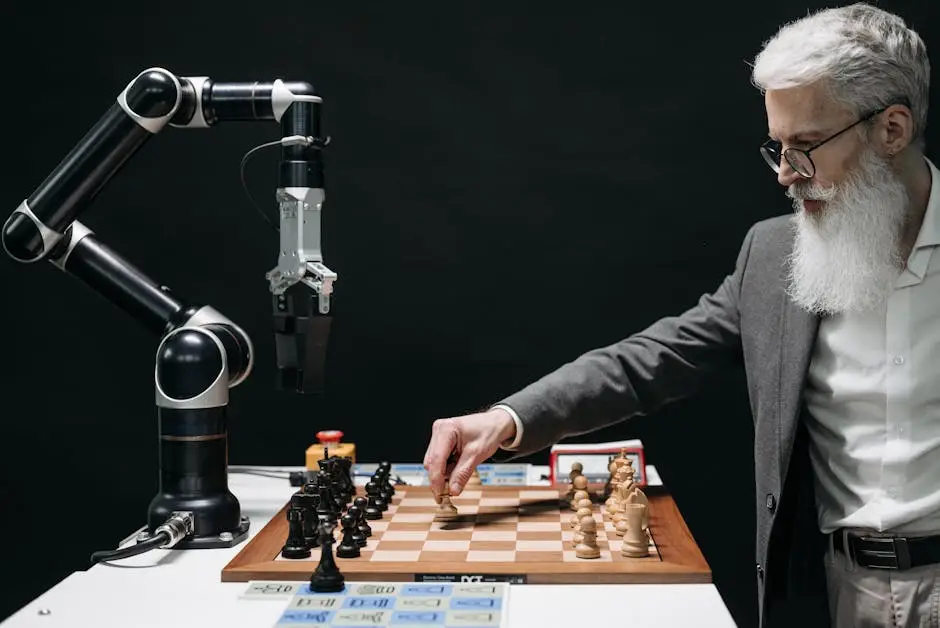
Adapting to the new era of AI in SEO doesn’t require you to become a machine learning expert. Instead, it demands a strategic shift in mindset and workflow. The first step is to actively embrace the growing suite of AI SEO tools. Leverage SEO automation to handle the heavy lifting of data analysis, technical audits, and initial content drafting. This frees up your most valuable resource—time—for high-level strategy. Secondly, you must become the ultimate quality gatekeeper. While AI content creation can accelerate production, human oversight is crucial for ensuring accuracy, originality, and a superior user experience (UX). Finally, use AI-powered insights to deepen your understanding of complex search intent. The future of SEO belongs to professionals who can skillfully guide these intelligent systems, blending machine efficiency with irreplaceable human creativity to deliver unparalleled value.
The era of single-keyword obsession is over. A cornerstone of modern AI in SEO is adopting a topic-first strategy. Instead of optimizing a page for one specific phrase, focus on creating comprehensive content clusters that cover a subject in its entirety. This approach mirrors how AI understands concepts and rewards topical authority. By comprehensively addressing the user’s broader search intent, you not only improve your rankings but also deliver a far more satisfying and complete user experience (UX).
As AI-driven search becomes better at evaluating content quality, your focus must intensify on what AI can’t fake: an exceptional user experience (UX). Signals like user engagement and satisfaction are direct inputs for Google’s algorithms. Leverage your unique first-party data—from customer feedback or site analytics—to understand your audience deeply. This allows you to create hyper-relevant content that perfectly matches search intent, giving you a competitive edge in the new landscape of AI in SEO.
Gaining a competitive edge with AI SEO tools requires a commitment to ethical use. While generative AI makes mass AI content creation tempting, the sustainable strategy is to treat these tools as assistants, not authors. Use AI to accelerate research and structure outlines, but always apply human oversight to fact-check, add a unique brand voice, and ensure originality. This ethical approach prevents low-quality output and builds trust, ultimately creating a superior user experience (UX) that search engines are designed to reward.

Looking ahead, the evolution of AI in SEO is set to accelerate, moving beyond current applications into more predictive and personalized realms. The future of SEO will likely see AI SEO tools that don’t just analyze past data but forecast emerging trends and predict shifts in search intent before they even happen. Search results, powered by increasingly sophisticated generative AI, will become even more tailored to the individual, creating a hyper-personalized user experience (UX). For professionals, this means the role will shift further from manual execution to strategic oversight—guiding AI systems, interpreting complex data, and ensuring that the final output aligns with brand goals and human values. The symbiosis between human and machine will only deepen, making strategic thinking the most valuable skill in search optimization.
The next frontier for AI in SEO is moving from reactive analysis to proactive forecasting. The future of SEO involves predictive models that can analyze market signals to anticipate emerging trends and shifts in search intent. Imagine AI SEO tools that don’t just report on what worked but predict which content topics will surge in popularity next quarter. This capability will enable strategists to allocate resources with greater precision, creating content ahead of the curve and capturing audience interest before competitors do.
The future of SEO is one-to-one. As AI becomes more sophisticated, it will increasingly leverage a user’s search history, location, and behavior to deliver hyper-personalized results. This ultimate focus on individual user experience (UX) means two users searching the same term may see different SERPs. For professionals, this reinforces the need to build content that deeply satisfies core search intent while being flexible enough to appeal to various user contexts, a key challenge in the evolving world of AI in SEO.
Despite the rise of powerful AI, the human element remains the most critical asset. AI can process data and automate tasks, but it cannot replicate genuine creativity, empathy, or strategic brand alignment. The future of SEO will be defined by professionals who can guide these systems, ask the right questions, and ensure the final output delivers an authentic user experience (UX). The most advanced AI in SEO strategy is one that expertly blends machine efficiency with irreplaceable human insight.
The integration of AI in SEO is not a signal of obsolescence but a call for evolution. Your future role is less about manual execution and more about strategic direction. By embracing SEO automation and sophisticated AI SEO tools, you can transcend the time-consuming tasks of the past and step into the role of a high-level strategist. The future of SEO will be shaped by professionals who can skillfully guide AI, ask insightful questions, and provide the critical human oversight that ensures accuracy, originality, and brand alignment. Your most valuable assets are now your creativity, your ethical judgment, and your unwavering commitment to delivering an exceptional user experience (UX). This powerful synergy between human intellect and machine efficiency is the new foundation for success, empowering you to navigate the complexities of modern search and deliver unprecedented value.
Transform your storefront into a 24/7 billboard! Discover how store window graphics, from decals to lettering, boost visibility, attract customers, and enhance your brand.

Choosing the best CMS for your business? Compare WordPress, Shopify, and Squarespace side-by-side to find the ideal platform for your online store or website.

Master choosing the right fonts for your brand. Learn font psychology, pairing, and legibility to craft a powerful brand identity that connects with your audience.