

Window Graphics: Turn Your Storefront into a 24/7 Billboard
Transform your storefront into a 24/7 billboard! Discover how store window graphics, from decals to lettering, boost visibility, attract customers, and enhance your brand.
In today’s fast-paced market, digital signage is more than just a modern-day poster. It’s a powerful network of dynamic screens—from video walls to interactive kiosks—that allows businesses to communicate with their audience in real-time. Whether you’re a retailer promoting a sale or a corporate office sharing vital updates, using digital signage for business is a direct path to boosting customer engagement. But with any significant technology purchase comes the critical question: is digital signage worth it? The initial digital signage cost can be substantial, making it crucial to look beyond the impressive visuals. This is where calculating your digital signage ROI (Return on Investment) becomes essential. It’s the definitive metric that helps you measure the financial and strategic value of your investment, separating a smart business decision from a costly, ineffective one. This guide will explore the key factors to help you make that determination.

When businesses weigh the question, is digital signage worth it, the list of compelling advantages is the first place to look. The most tangible of these is the potential for a direct sales lift. Dynamic, eye-catching displays at the point of purchase can influence buying decisions, promote high-margin items, and encourage upsells, directly impacting your bottom line. Beyond pure revenue, the benefits of digital signage extend to brand perception. A sleek, modern display network elevates your brand’s image, creating a more professional and engaging atmosphere. This enhanced customer engagement is a critical factor; animated content captures attention far more effectively than static posters, ensuring your key messages are not just seen, but absorbed. This flexibility allows for real-time updates, saving on printing costs and making your marketing more agile. Ultimately, these combined advantages are what drive a strong return on investment digital signage provides.
One of the most powerful benefits of digital signage for business is its direct impact on point-of-sale revenue. By displaying vibrant promotions, upselling suggestions, or limited-time offers, you can capture attention at the critical moment of decision. This heightened customer engagement often translates into larger basket sizes and impulse purchases, providing a clear, measurable metric when you calculate digital signage ROI. This tangible sales lift is a core component when determining if the initial investment is worthwhile for your specific goals.
One of the most significant benefits of digital signage is its ability to transform the customer experience. Dynamic content can reduce perceived wait times in queues by providing entertainment or useful information. Interactive maps and directories empower visitors, creating a smoother, more self-sufficient journey through your space. This boost in customer engagement fosters a modern, helpful atmosphere that builds brand loyalty and encourages repeat visits. While less direct than a sales receipt, this enhanced experience is a vital component when evaluating your overall investment.
One of the most powerful, long-term benefits of digital signage is its ability to elevate your brand’s image. While static posters can look dated, dynamic digital displays project a modern, professional, and tech-savvy persona. This allows you to control your brand narrative with high-quality, consistent messaging. This perception of being an innovative leader builds trust and credibility—a crucial, though less tangible, factor to consider when evaluating if digital signage is worth it for your business’s reputation and growth.
Perhaps the most practical of the benefits of digital signage is the ability for dynamic communication. Traditional print requires design, printing, and distribution—a process that is both slow and costly. With digital signage for business, you can update messaging across one screen or hundreds in an instant. This agility means you can react to market changes, promote daily specials, or share urgent news immediately. This flexibility not only reduces waste and printing costs but also ensures your content is always timely, boosting the overall return on investment digital signage delivers.

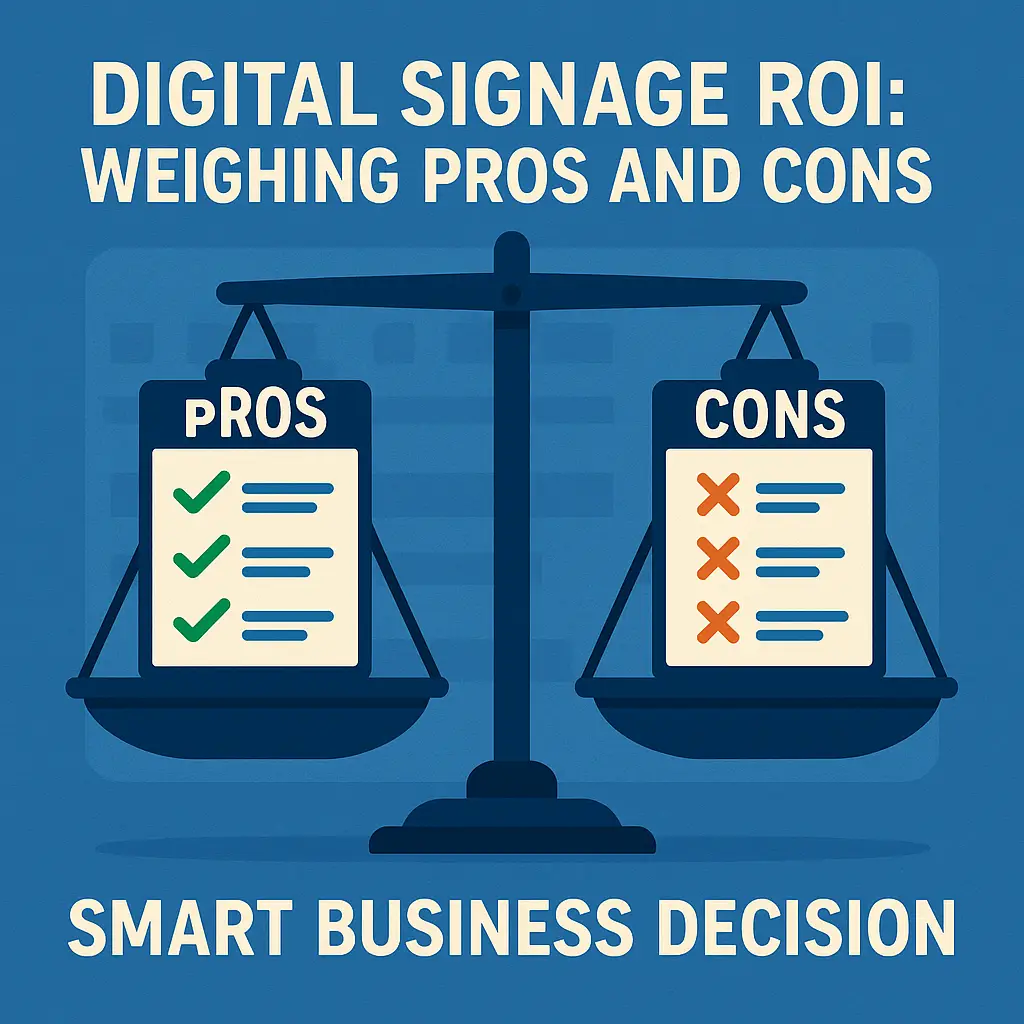
While the list of advantages is compelling, a balanced look at the digital signage pros and cons is essential before making a decision. The most significant hurdle for many businesses is the initial digital signage cost. This isn’t just the price of the screens; it includes media players, mounting hardware, software licenses, and installation, which can represent a substantial upfront capital expenditure. Beyond the initial setup, there are ongoing operational challenges. These include potential maintenance, software subscription fees, and, most importantly, the relentless need for fresh, high-quality content. A screen displaying outdated or poorly designed information can be worse than no screen at all. These factors form the “Investment” part of your ROI calculation, and understanding them fully is critical to honestly answering the question: is digital signage worth it for your specific operational capacity and budget?
The most immediate challenge is the initial digital signage cost. This goes far beyond the price of the screens themselves. You must also budget for essential components like media players, secure mounting hardware, software licenses, and potentially professional installation fees. Depending on the scale of your network, this can add up to a significant capital expense. For many businesses, this initial cash outlay is the biggest single factor they must weigh when determining if digital signage is worth it for their budget.
Beyond the initial purchase, you must account for recurring operational expenses. These ongoing costs often include software subscription fees, potential hardware maintenance, and electricity consumption. While individually small, these expenses accumulate over time and directly impact the total digital signage cost. Failing to budget for these can erode your profit margins and negatively affect your final digital signage ROI, making it a critical factor when calculating whether the investment is truly sustainable for your business.
Another crucial factor is the technical skill required to manage the system effectively. Your team will need training to use the content management software, schedule content, and troubleshoot common issues. This “human element” represents a real cost, whether in dedicated staff time or formal training programs. Without someone capable of managing the network, your investment can’t perform optimally. This is a vital consideration when evaluating the total digital signage cost and deciding if digital signage is worth it for your business operations.

After weighing the digital signage pros and cons, the next step is to put numbers to the problem. To definitively answer is digital signage worth it, you must calculate digital signage ROI. The standard formula is (Net Profit / Total Investment) x 100. The “Total Investment” side includes the complete digital signage cost—hardware, software, installation, and ongoing operational expenses. The “Net Profit” side, however, is more nuanced. It’s a combination of tangible gains (like increased sales revenue or savings on print marketing) and intangible benefits (like improved brand perception or higher customer engagement). The key to a meaningful calculation is defining clear goals beforehand. Whether you aim to boost sales of a specific product by 15% or reduce perceived wait times, establishing metrics allows you to measure the real impact and justify the investment, providing a clear return on investment digital signage generates for your business.
Before you can effectively calculate digital signage ROI, you must first define what success looks like for your specific business. This means setting clear goals and Key Performance Indicators (KPIs). Are you aiming to increase sales of a promotional item by 15%? Or perhaps reduce perceived wait times to improve customer engagement scores? By establishing these measurable targets upfront, you create a clear benchmark to evaluate performance against. This is the foundational step in determining if digital signage is worth it for your organization.
To accurately calculate digital signage ROI, you must tally the complete cost of ownership. This isn’t just the initial hardware and software; include installation fees, potential maintenance, and ongoing staff time for content management. This total figure is the ‘Investment’ side of your ROI equation. A clear understanding of this full digital signage cost is the essential second step in evaluating the true return on investment digital signage will provide and answering if it’s a worthwhile venture for your business.
Now, focus on the “Net Profit” side of the equation. This involves measuring direct financial gains. Start by tracking the sales uplift for specific products or services you promote on your screens. Then, calculate the money saved by eliminating print collateral like posters and flyers. These tangible figures provide the hard data for your calculation. This step is critical to getting a clear financial picture and forms the core evidence when you calculate digital signage ROI, ultimately proving the return on investment digital signage delivers for your business.
Let’s use a simple scenario. Imagine a coffee shop invests a total of $5,000 in its first year—this is the total digital signage cost. Over that year, they track a $4,800 increase in sales on promoted high-margin drinks and save $1,200 by eliminating printed menus and posters. Their total financial gain is $6,000. To calculate digital signage ROI, the formula is: ($6,000 Gain / $5,000 Investment) x 100 = 120%. This positive result provides clear, data-driven proof that for this shop, the investment was worth it.
So, after exploring the digital signage pros and cons, what’s the final verdict? Is digital signage worth it? The answer isn’t a simple yes or no—it’s a strategic one that depends entirely on your business goals and operational capacity. As we’ve seen, the potential benefits of digital signage are immense, from driving sales to transforming customer engagement. However, these advantages must be weighed against the real challenges, including the initial digital signage cost and the ongoing commitment to content creation. The true value emerges when you move beyond speculation and commit to calculating your potential digital signage ROI. By defining clear goals, understanding your total investment, and measuring your returns, you transform the decision from a guess into a data-driven business case. If you have a clear strategy and are prepared for the operational demands, it can be a powerful engine for growth.
Transform your storefront into a 24/7 billboard! Discover how store window graphics, from decals to lettering, boost visibility, attract customers, and enhance your brand.

Choosing the best CMS for your business? Compare WordPress, Shopify, and Squarespace side-by-side to find the ideal platform for your online store or website.

Master choosing the right fonts for your brand. Learn font psychology, pairing, and legibility to craft a powerful brand identity that connects with your audience.