

Design Effective Vehicle Wraps That Turn Heads
Learn to design effective vehicle wraps that turn heads and boost your brand. Get expert design tips for mobile advertising success, ensuring clarity and impact on the road.
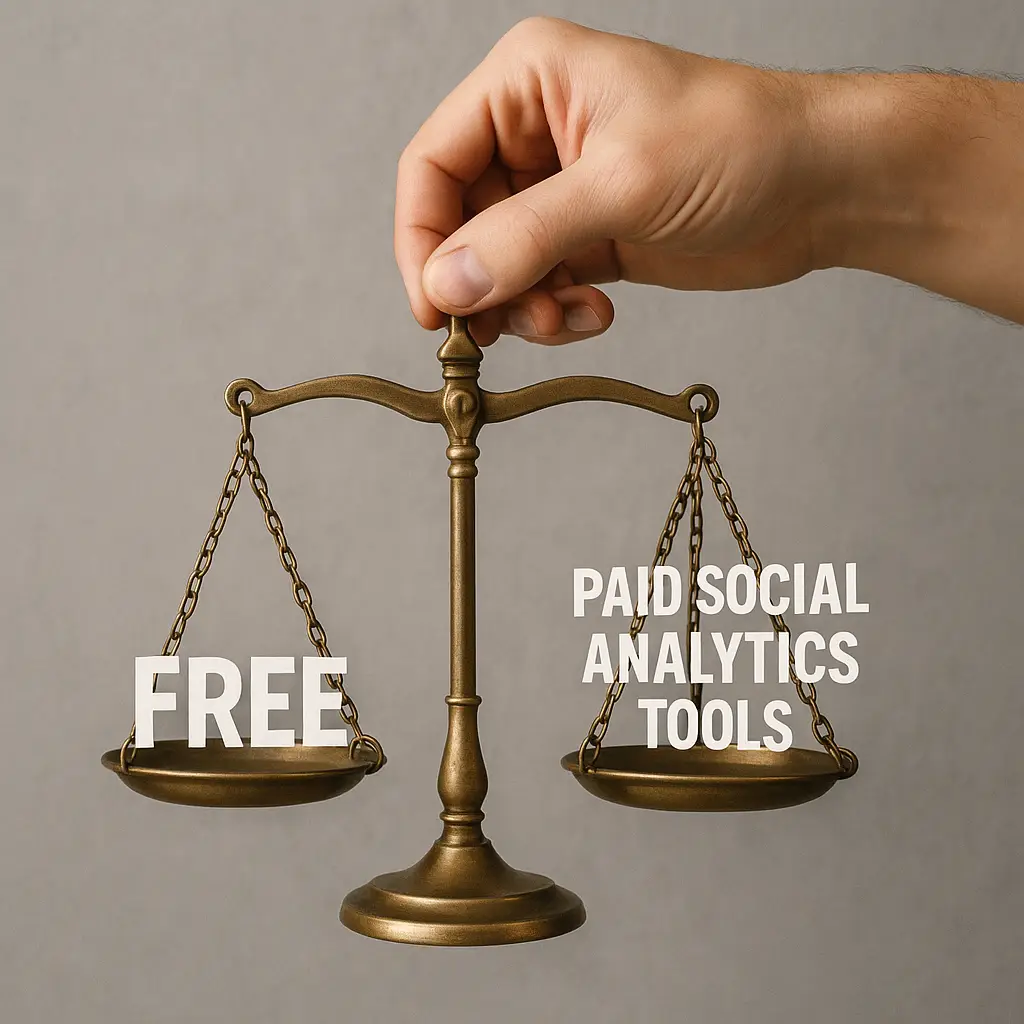
In today’s digital marketplace, simply having a social media presence isn’t enough to drive growth. The real power lies in understanding what’s working, what isn’t, and why. This is where social media analytics comes in. By tracking key social media metrics, you can transform raw data into actionable strategies, gain deeper audience insights, and ultimately prove your social media ROI. But getting that data requires the right tools. The central question for many businesses, from startups to enterprises, is the debate over free vs. paid social media analytics tools. Do you stick with the no-cost native options, or is it time to invest in a premium solution? This guide will help you navigate that choice, breaking down the capabilities of both so you can select the best social analytics tools to fuel your success.
At their core, social media analytics tools are software solutions designed to collect data from social networks and translate it into understandable, actionable insights. They move beyond basic vanity metrics to reveal the true performance behind your posts, campaigns, and overall strategy. While a simple view might show likes and follower counts, these powerful platforms track crucial social media metrics like engagement rate, reach, click-throughs, and audience demographics. The more advanced tools, which are central to the free vs paid social media debate, also provide features like sentiment analysis to measure brand perception, in-depth competitive analysis, and robust social listening tools to monitor conversations beyond your own channels. Ultimately, they are the engine that powers effective social media reporting, allowing you to prove value and make smarter strategic decisions based on hard data, not just intuition.

For businesses just starting out, solopreneurs, or anyone on a tight budget, free social media analytics tools are an invaluable resource. These are often the native analytics suites built directly into platforms like Facebook, Instagram, and LinkedIn. They provide a solid foundation by tracking essential social media metrics such as follower growth, post reach, engagement rates, and video views. This data allows you to get a clear picture of what content is resonating and begin your journey with basic social media reporting. While they lack the advanced capabilities of premium options—you won’t find deep competitive analysis or sophisticated sentiment analysis here—they are the perfect entry point. They answer the “free” side of the free vs paid social media debate by delivering crucial baseline audience insights without any financial commitment, enabling you to start making data-backed decisions immediately and learn the ropes of analytics.
Free social analytics tools are the perfect match for individuals and businesses at the beginning of their growth journey. This includes startups bootstrapping their marketing, solopreneurs managing their own brand, and small businesses with tight budgets. For these users, the goal is to track core social media metrics and gain initial audience insights without a financial commitment. They provide the fundamental data needed to get started, making them an excellent first step in the free vs paid social media decision-making process before more complex needs arise.
The most significant advantage is eliminating the financial barrier to entry. Free tools empower you to start tracking essential social media metrics and generating basic social media reporting from day one, without any investment. This is invaluable for proving the concept of social media marketing internally and learning the fundamentals of data analysis. You can gain crucial initial audience insights and begin to understand content performance in a risk-free environment, establishing a solid foundation before considering more powerful paid solutions.
The primary drawback of free tools is their limited scope. Your data is often siloed across platforms, making comprehensive social media reporting a manual, time-consuming task. They critically lack advanced features like in-depth competitive analysis, true sentiment analysis, or robust social listening tools. This shallow data makes it difficult to track brand perception or industry conversations. Ultimately, this surface-level view hinders your ability to demonstrate social media ROI, which is a key factor in the free vs paid social media debate for growing businesses.
When it comes to free tools, the most powerful options are the ones built into the platforms you use daily. Meta Business Suite (for Facebook and Instagram), LinkedIn Analytics, and X Analytics (formerly Twitter) are essential starting points. Each provides a direct look into fundamental social media metrics, including post reach, engagement rates, and basic demographic data. While they don’t offer advanced features, these native suites are invaluable for gaining initial audience insights and tracking content performance without any financial investment.
As your business scales and your social media strategy matures, you’ll inevitably hit the limitations of free platforms. This is the critical turning point in the free vs paid social media debate, where investing in a premium solution becomes a strategic necessity. Paid social media analytics tools move beyond surface-level data to provide the deep, actionable insights needed for a competitive edge. They offer a suite of advanced features you simply can’t get for free, including comprehensive competitive analysis, sophisticated sentiment analysis to monitor brand health, and powerful social listening tools to tap into wider industry conversations. By consolidating data from all your profiles into a single dashboard, these platforms revolutionize your social media reporting and make it possible to accurately calculate and prove your social media ROI, justifying your marketing spend and driving smarter, data-led decisions for growth.
The upgrade to paid social media analytics tools is essential for specific organizations. Growing businesses whose strategies have outpaced basic metrics, marketing agencies managing multiple client accounts, and enterprises requiring deep competitive analysis are prime candidates. For these users, the free vs paid social media debate is settled by the demand for scalability, robust social media reporting, and the crucial ability to prove social media ROI. An investment becomes a non-negotiable step for making strategic decisions and maintaining a competitive edge.
The primary advantage of paid solutions is the depth of data they unlock. By consolidating all your accounts into one dashboard, they streamline social media reporting and save immense time. You gain access to crucial advanced features like detailed competitive analysis, automated sentiment analysis to gauge brand perception, and robust social listening tools to monitor industry trends. This transforms raw data into strategic intelligence, providing the actionable audience insights necessary to optimize your strategy and definitively prove social media ROI.
The primary barrier to adopting paid solutions is, unsurprisingly, the cost. These tools represent a significant financial commitment, with prices often scaling based on features and usage. This is a central point in the free vs paid social media decision. Beyond the price tag, there is also a learning curve. Mastering these complex platforms to fully leverage features like advanced sentiment analysis or detailed social media reporting requires an investment of time and training, which can be a challenge for already busy teams.
For growing businesses and agencies, the answer is unequivocally yes. While the cost is a valid consideration in the free vs paid social media debate, the value they deliver in strategic advantage is immense. The ability to perform deep competitive analysis, monitor brand health through sentiment analysis, and definitively calculate social media ROI are not just nice-to-haves; they are essential for scaling. This makes paid tools less of an expense and more of a critical investment in smart, sustainable growth.

When you place them side-by-side, the core differences in the free vs paid social media analytics debate become starkly clear, moving beyond simple cost to strategic capability. Free tools, typically native to each platform, provide a siloed, surface-level view of essential social media metrics like reach and engagement. In contrast, the best social analytics tools in the paid category offer a consolidated, holistic dashboard for all your channels. The real chasm appears in advanced features. While free options offer zero capability for sentiment analysis or deep competitive analysis, paid solutions make these central pillars of their offering. This allows you to monitor brand health and benchmark against competitors effortlessly. Furthermore, paid platforms provide robust social listening tools to track industry conversations and offer automated, customizable social media reporting that makes demonstrating social media ROI simple. Ultimately, the choice between free vs. paid social analytics tools hinges on whether you need a basic snapshot or a comprehensive strategic command center.
A critical distinction in the free vs. paid social analytics tools debate is data history. Free native platforms often restrict you to a narrow window, typically the last 90 days, making long-term trend analysis and year-over-year social media reporting impossible. Paid tools, in contrast, store your data from the moment you connect your account. This provides an invaluable historical archive, allowing you to track performance, analyze evolving audience insights, and measure growth against past benchmarks with far greater accuracy.
This is where the chasm in the free vs paid social media debate truly widens. Free tools provide rigid, non-customizable reports. You get standard templates, making comprehensive social media reporting across channels a manual, time-consuming process. Paid solutions, however, excel here. They offer drag-and-drop report builders, custom branding, and automated scheduling. This allows you to create tailored reports for stakeholders—from high-level summaries for executives to granular data for your team—making it infinitely easier to demonstrate social media ROI.
This is a defining difference in the free vs paid social media debate. Free tools leave you in the dark, offering virtually no built-in competitive analysis. Paid platforms, however, excel here. They allow you to benchmark key social media metrics against your top rivals and use powerful social listening tools to monitor industry trends and brand mentions. This strategic intelligence provides a market-wide view, giving you a competitive edge that free solutions simply cannot match.
Here lies one of the most significant divides in the free vs paid social media debate. Free tools are reactive, only showing you data on your own posts. They are completely deaf to the wider conversation, offering no sentiment analysis or social listening tools. Paid solutions are proactive, allowing you to monitor brand mentions and industry keywords across the social web. They automatically analyze this data to provide sentiment analysis, telling you whether the buzz is positive, negative, or neutral—offering insights free tools can’t touch.
Another crucial distinction in the free vs paid social media debate involves teamwork and help. Free tools are designed for solo users and offer little to no customer support beyond a public forum. Paid solutions, however, are built for teams. They include collaboration features like multiple user seats, shared dashboards, and workflow tools for streamlined social media reporting. More importantly, they provide dedicated customer support and onboarding, ensuring your team can resolve issues quickly and leverage the tool effectively—a vital consideration for any growing business.
Now that we’ve explored the fundamental differences, it’s time to look at the top contenders in the market. The ultimate decision in the free vs. paid social analytics tools debate hinges on your unique business needs, budget, and strategic goals. The best social analytics tools aren’t one-size-fits-all; they are the ones that provide the specific data you require for growth. To help you make an informed choice, we’ve compiled a list of leading platforms for 2024, highlighting options from both sides of the free vs paid social media spectrum. Whether you need to master basic social media reporting or require sophisticated competitive analysis and sentiment analysis to calculate social media ROI, this list has a solution. We’ll break down the top free platforms for getting started and the premium social media analytics tools that offer the power to scale your strategy.
When it comes to premium social media analytics tools, Sprout Social consistently earns its place as the best all-around platform. It effectively settles the free vs paid social media debate by offering a powerful, unified suite for serious businesses. Its intuitive interface excels at simplifying complex social media reporting, while providing deep competitive analysis and robust social listening tools. For teams that need to demonstrate social media ROI and gain actionable audience insights, Sprout Social is the gold-standard investment.
For teams and agencies where demonstrating value is key, Agorapulse is a powerhouse for in-depth social media reporting. It excels at transforming raw social media metrics into clear, customizable, and presentation-ready reports that directly address social media ROI. Its Power Reports feature allows you to build detailed analyses tailored to specific stakeholders, a crucial capability that highlights the value side of the free vs paid social media debate. Agorapulse makes it easy to tell a compelling story with your data.
Sendible is purpose-built for agencies, making it a standout choice among premium social media analytics tools. Its platform excels at managing numerous client accounts from a single, unified dashboard and offers robust content approval workflows. Crucially for client relationships, it provides customizable, white-label social media reporting that makes demonstrating social media ROI straightforward. This scalability and focus on agency needs makes it a clear winner in the free vs paid social media discussion for multi-client management.
When the conversation moves beyond your own channels, Brandwatch stands as one of the most powerful social listening tools on the market. It goes far beyond what free platforms can do, using AI to scan millions of data points across social media, blogs, and news sites. This makes it a titan on the premium side of the free vs paid social media debate, delivering incredibly nuanced sentiment analysis and deep audience insights. For businesses needing to track brand health and understand market-wide conversations, Brandwatch provides an unmatched level of intelligence.
Buffer strikes the perfect balance for small teams seeking powerful analytics without an enterprise price tag. It represents an ideal first step into paid solutions, effectively bridging the gap in the free vs paid social media discussion. Its clean dashboard simplifies social media reporting, allowing teams to easily track key social media metrics and gain actionable audience insights. While not as deep as more expensive platforms, Buffer provides the essential tools needed to measure performance and start proving social media ROI, making it a fantastic value-driven upgrade.

Choosing from the many available social media analytics tools can feel overwhelming, but the right decision boils down to your specific business context. The core of the free vs paid social media debate isn’t about which tool is universally best, but which is best for you. Start by defining your goals. Are you focused on tracking foundational social media metrics and gaining initial audience insights, where free tools suffice? Or is your priority to conduct deep competitive analysis, track brand health with sentiment analysis, and definitively prove social media ROI? Next, assess your budget and team size. A premium tool is a significant investment, so its advanced features must align with your capacity to use them. By clearly outlining your strategic needs, team structure, and financial resources, you can confidently navigate the choice between free vs. paid social analytics tools and select a platform that will truly drive business growth.
Before you even begin comparing social media analytics tools, you must first define what success looks like for your business. Are your primary goals to increase brand awareness, drive sales, or improve customer sentiment? Each objective is measured by different Key Performance Indicators (KPIs). For instance, a goal to increase market share requires deep competitive analysis, while proving value to stakeholders hinges on tracking social media ROI. Clarifying your goals will immediately help you navigate the free vs paid social media decision by identifying the specific data you need.
Your budget is a primary factor in the free vs paid social media debate, but it extends beyond the subscription price. You must also consider your team’s resources. A powerful paid platform offers advanced features like deep competitive analysis and automated social media reporting, but it also requires a time investment for training and mastery. Be realistic: do you have the team capacity to leverage these features effectively? The right choice aligns both your financial commitment and the human resources available to maximize your investment.
Your team’s comfort level with data is a crucial factor in the free vs paid social media decision. Free native analytics are generally straightforward and require minimal technical expertise. However, the best social analytics tools in the paid category offer complex features like custom social media reporting dashboards and nuanced sentiment analysis. A tool is only as powerful as your team’s ability to use it. Be honest about their current skills to avoid investing in a platform whose best features go untouched.
Nearly every premium platform offers a free trial, and this is your best opportunity to resolve the free vs paid social media debate for your team. Use this risk-free period to go beyond feature lists and actively test the functionalities you need. Can you create a custom social media reporting dashboard easily? How intuitive is the competitive analysis module? This hands-on experience is the ultimate test, allowing you to assess the platform’s usability and value before making a financial commitment.
Ultimately, the debate over Free vs. Paid Social Analytics Tools is not about finding a single “best” solution, but about finding the right fit for your unique business journey. For those just starting, free tools offer an essential, no-cost gateway to understanding fundamental social media metrics and content performance. However, as your business ambitions grow, the limitations become clear. The need for deeper competitive analysis, sophisticated social listening tools, and the ability to concretely prove social media ROI inevitably pushes growing brands toward premium solutions. By following the steps outlined above—defining your goals, evaluating your budget, and testing platforms with free trials—you can move beyond the abstract debate. You’ll be equipped to make a truly data-driven decision, selecting the tool that will not just track your data, but transform it into a powerful engine for strategic growth.
Learn to design effective vehicle wraps that turn heads and boost your brand. Get expert design tips for mobile advertising success, ensuring clarity and impact on the road.

Navigate Toronto sign permits and bylaws for your small business. This guide simplifies the application process, types of signs, and avoids costly penalties.

Explore the future of retail with in-store interactive signage trends. Boost customer engagement, bridge digital/physical gaps, and unlock data with AI, AR, and phygital tech.